

Members
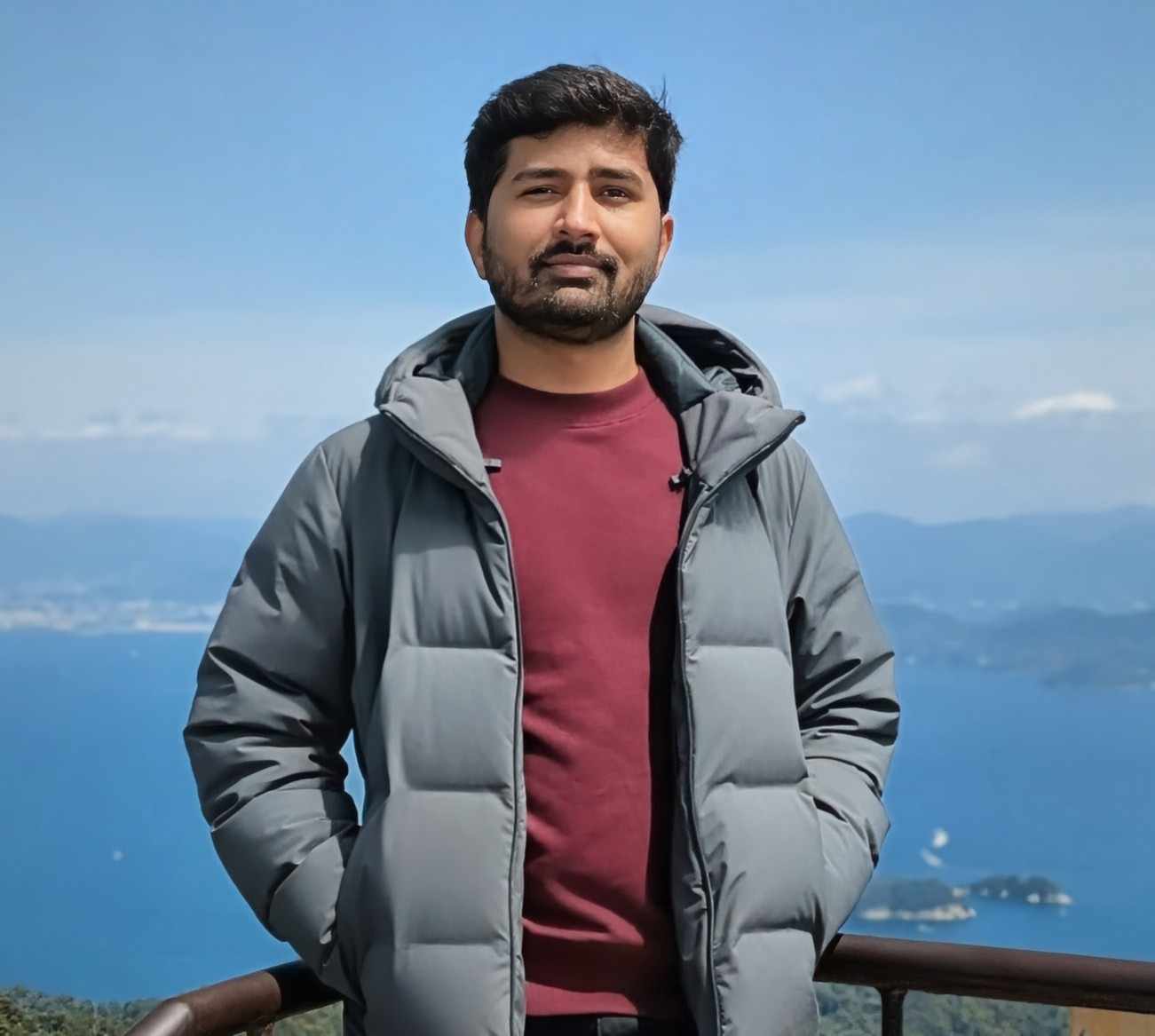
Vijay Pratap SINGHPostdoctoral Researcher
(Yabuta Group)
Cosmic Dust, Micrometeorites, Cosmochemistry, Geology, Origin of life, Evolution of atmosphere
Affiliations
WPI-SKCM², Hiroshima University
Bio
Dr. Vijay Pratap Singh is a Planetary Scientist and Postdoctoral Researcher within the WPI-SKCM2 node at Hiroshima University, Japan.
He earned his Ph.D. from the National Institute of Oceanography (CSIR-NIO) in Goa, India, where his doctoral research focused on the comprehensive characterization, textural evolution, and classification of micrometeorites recovered from the Central Indian Ocean Basin (CIOB), Antarctica, and Deccan intertrappean layers of the K-Pg boundary. This extensive foundational work provided key insights into the physical properties of cosmic dust, its contributing extraterrestrial sources, and its diverse implications for the Earth system, including its biogeochemical influence.
Building on this solid analytical expertise, Dr. Singh is currently initiating new research to investigate the complex organic content of micrometeorites. Utilizing a suite of high-precision instrumentation, including SEM, EPMA, Nano-SIMS, Micro-Raman, Py-GCMS, and STXM-XANES, his emerging work aims to explore how these extraterrestrial materials may have delivered vital prebiotic compounds to early Earth, probing their potential role in the origin of life. He also holds an M.Tech in Applied Geology from Dr. Harisingh Gour University, Sagar, India and a B.Sc. from Lucknow University, U.P., India.
Mentor :Hikaru Yabuta
Co-Mentor :Katsuya Inoue
Co-Mentor :Hiromasa Niinomi
What I like about my science
What fascinates me most about my research is that the cosmic world is constantly interacting with ours without us even noticing. Every single day, Earth is silently bombarded by cosmic dust— tiny, invisible fragments that have shaped our planet’s evolution throughout geological time. To me, these particles are like precious, free deliveries from space; they allow us to study the universe right here in the laboratory, without the need for billion-dollar space missions. It is incredible to think that these overlooked specks of dust hold the biggest secrets of our solar system. Not only do they offer vital clues about how extraterrestrial material may have seeded the origin of life, shaped our early atmosphere, and triggered ancient mass extinctions, but even today, this continuous rain of cosmic material quietly influences our modern biogeochemical cycles and climate.
Media Coverage & Related Links
Reflecting on Peace: WPI-SKCM² Members Participate in Hiroshima Peace Tour
He earned his Ph.D. from the National Institute of Oceanography (CSIR-NIO) in Goa, India, where his doctoral research focused on the comprehensive characterization, textural evolution, and classification of micrometeorites recovered from the Central Indian Ocean Basin (CIOB), Antarctica, and Deccan intertrappean layers of the K-Pg boundary. This extensive foundational work provided key insights into the physical properties of cosmic dust, its contributing extraterrestrial sources, and its diverse implications for the Earth system, including its biogeochemical influence.
Building on this solid analytical expertise, Dr. Singh is currently initiating new research to investigate the complex organic content of micrometeorites. Utilizing a suite of high-precision instrumentation, including SEM, EPMA, Nano-SIMS, Micro-Raman, Py-GCMS, and STXM-XANES, his emerging work aims to explore how these extraterrestrial materials may have delivered vital prebiotic compounds to early Earth, probing their potential role in the origin of life. He also holds an M.Tech in Applied Geology from Dr. Harisingh Gour University, Sagar, India and a B.Sc. from Lucknow University, U.P., India.
Mentor :Hikaru Yabuta
Co-Mentor :Katsuya Inoue
Co-Mentor :Hiromasa Niinomi
What I like about my science
What fascinates me most about my research is that the cosmic world is constantly interacting with ours without us even noticing. Every single day, Earth is silently bombarded by cosmic dust— tiny, invisible fragments that have shaped our planet’s evolution throughout geological time. To me, these particles are like precious, free deliveries from space; they allow us to study the universe right here in the laboratory, without the need for billion-dollar space missions. It is incredible to think that these overlooked specks of dust hold the biggest secrets of our solar system. Not only do they offer vital clues about how extraterrestrial material may have seeded the origin of life, shaped our early atmosphere, and triggered ancient mass extinctions, but even today, this continuous rain of cosmic material quietly influences our modern biogeochemical cycles and climate.
Media Coverage & Related Links
Reflecting on Peace: WPI-SKCM² Members Participate in Hiroshima Peace Tour