

Members
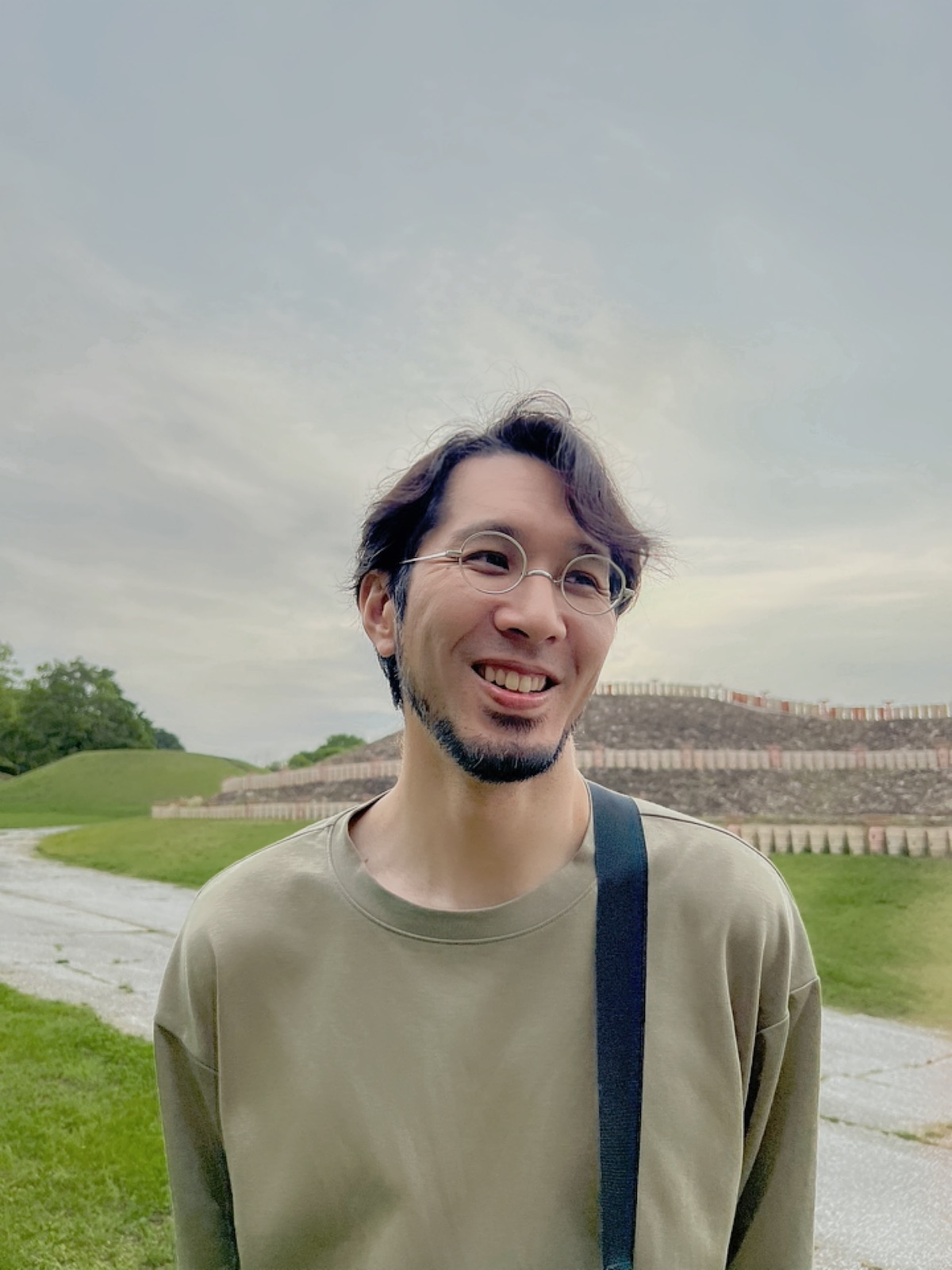
Wataru YUASASpecially Appointed Assistant Professor
Hiroshima University
(Kotorii Group)
Mathematics (quantum topology, knot theory)
Affiliations
WPI-SKCM², Hiroshima University, Specially Appointed Assistant Professor
wyuasa_at_hiroshima-u.ac.jp
Bio
After receiving my Ph.D. in Science from Tokyo Institute of Technology, I held postdoctoral and assistant professor positions at Kyoto University. I am currently affiliated with SKCM². My research has mainly focused on quantum topology, a field of mathematics that studies structures connecting knot theory, representation theory, mathematical physics, and so on.
At SKCM², I aim to apply ideas from quantum topology to the study of protein structures. In particular, I use knotoids, which are generalizations of knots, to construct mathematical and topological descriptors of proteins. Through this approach, I hope to clarify how tools from low-dimensional topology can be used to capture structural features of proteins and related molecular objects.
Mentor :Yuka Kotorii
Co-Mentor :Shinichi Tate
What I like about my science
I enjoy research because it allows me to step away from everyday concerns and concentrate deeply on a single problem. In mathematics, I can freely rethink an idea through repeated trial and error, while gradually building up facts that are recognized as correct within a rigorous framework. I find this combination of free imagination and precise logic especially attractive, and it is one of the reasons why I feel at home in mathematical research.
Website link
At SKCM², I aim to apply ideas from quantum topology to the study of protein structures. In particular, I use knotoids, which are generalizations of knots, to construct mathematical and topological descriptors of proteins. Through this approach, I hope to clarify how tools from low-dimensional topology can be used to capture structural features of proteins and related molecular objects.
Mentor :
Co-Mentor :Shinichi Tate
What I like about my science
I enjoy research because it allows me to step away from everyday concerns and concentrate deeply on a single problem. In mathematics, I can freely rethink an idea through repeated trial and error, while gradually building up facts that are recognized as correct within a rigorous framework. I find this combination of free imagination and precise logic especially attractive, and it is one of the reasons why I feel at home in mathematical research.
Website link