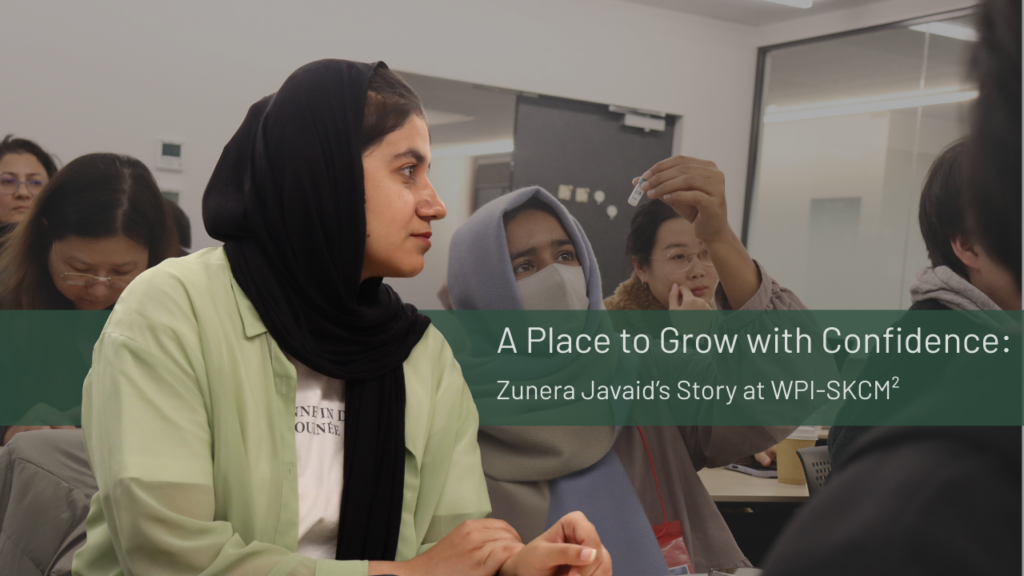
A Place to Grow with Confidence: Zunera Javaid’s Story at WPI-SKCM²
Zunera Javaid, a first-year PhD student at WPI-SKCM² from Pakistan, decided to pursue her doctoral studies soon after completing her Master’s degree at the same institute. Her experience at WPI-SKCM² expanded her academic horizons and strengthened her aspiration to engage in interdisciplinary research, connect with like-minded scientists, and pursue an academic career in the future—goals strongly supported by the institute’s research environment.
A New Journey, A New Discovery
After excelling in mathematics, Zunera decided to step outside her comfort zone and explore a new academic path that would allow her to engage with different scientific fields. Having previously worked on lattice theory, she became intrigued by the possibility of applying her mathematical skills to biophysics. This transition aligned naturally with WPI-SKCM², which offers abundant opportunities to collaborate with researchers across diverse disciplines, extending far beyond biophysics alone.
Learning Through Independence in a Supportive Environment
What Zunera finds most striking about WPI-SKCM² is the balance between a stress-free research environment and an emphasis on self-reliance. In her earlier academic experiences, she often relied on asking others for direct solutions when encountering difficulties. Over time, she realized that this approach limited her learning and personal growth.
At WPI-SKCM², however, researchers are given the time, information, and resources needed to explore solutions independently. Rather than being pressured by strict supervision, students are encouraged to work at their own pace, investigate problems thoroughly, and engage in meaningful discussions with mentors and colleagues. This approach has reshaped Zunera’s mindset, allowing her to view challenges as solvable and significantly boosting her confidence in advancing her research.
“Before, when I got stuck, I would immediately ask someone what to do, and they would tell me the answer. But that wasn’t real learning. Here, when I face a problem, I first do my own research to explore possible solutions, and then I discuss them with my professor and mentors. Together, we arrive at a better solution.”
A Community United by Shared Passion
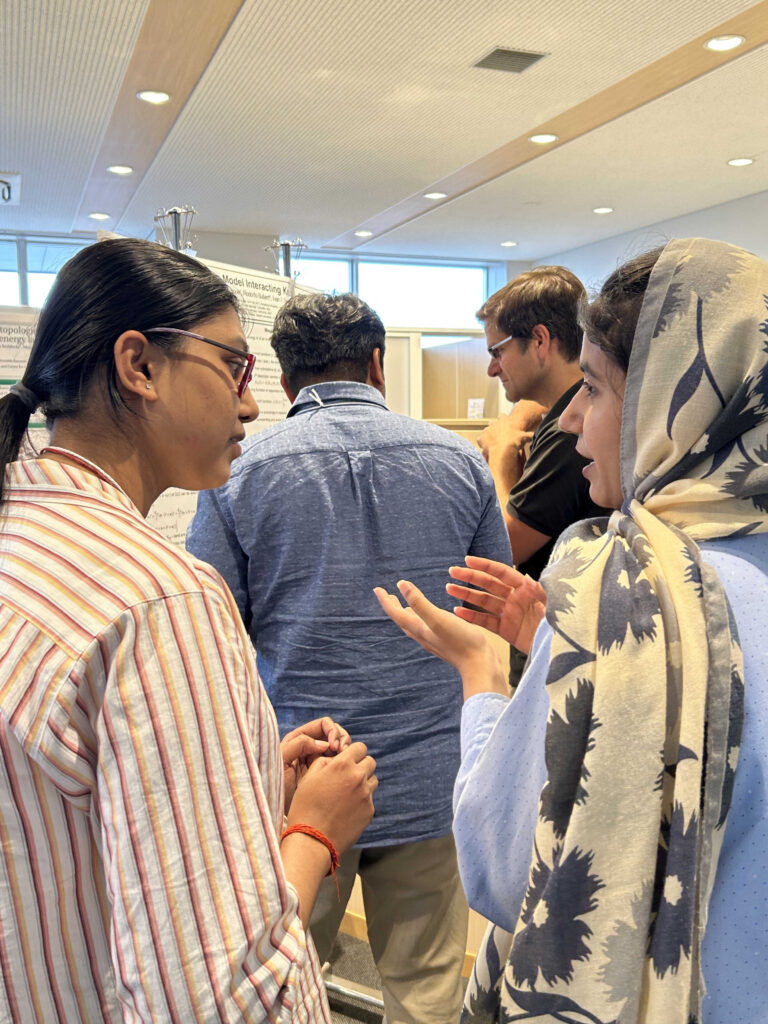
While researchers at WPI-SKCM² come from diverse academic backgrounds, they are united by a shared interest in chirality and knot topology. This common ground not only fosters interdisciplinary collaboration but also cultivates a strong sense of community.
Zunera actively engages in the activities offered by WPI-SKCM², motivated by her interest in connecting with like-minded scientists to exchange knowledge and explore opportunities for research collaboration. Rather than remaining solely in the laboratory, she is often seen participating in the institute’s events and community activities.
She values the openness of the research environment, where discussions can happen freely and informally at any time. Regardless of nationality or field of expertise, this shared passion for chirality fosters a sense of belonging—one that feels less like a workplace and more like a close-knit community.
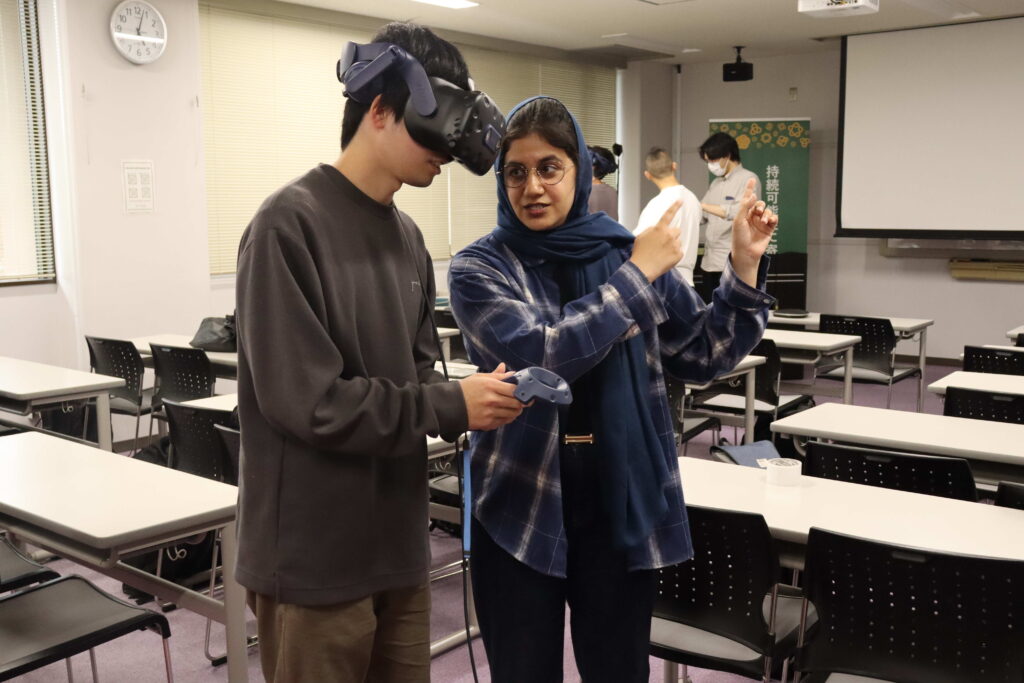
Diversity in Science: Multiple Doors to Solutions
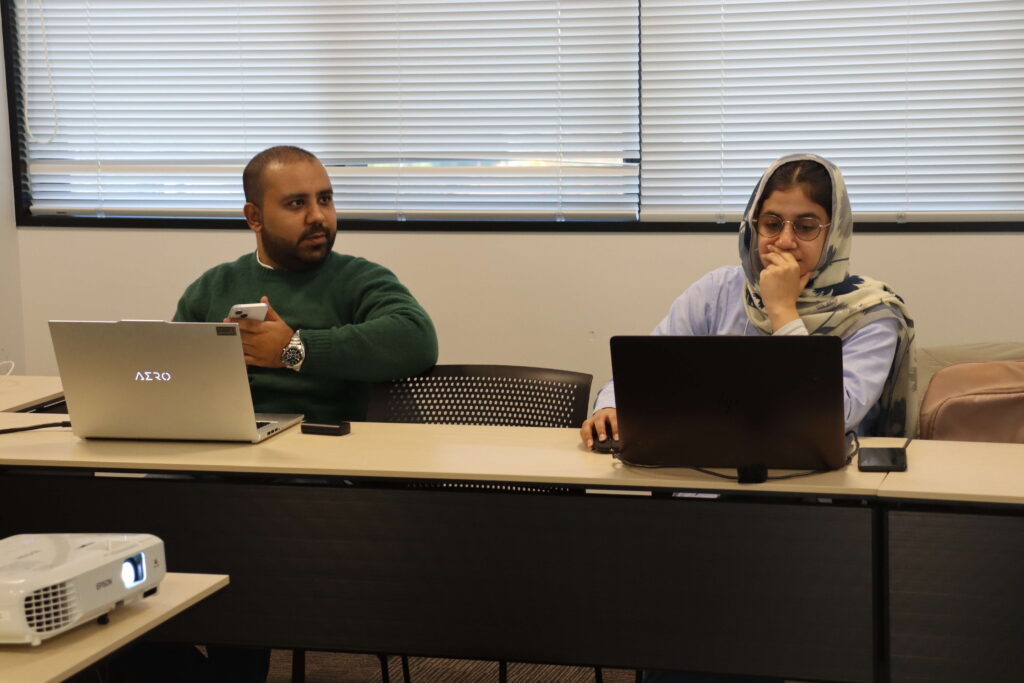
Working in an international and interdisciplinary environment has transformed Zunera’s perspective on research. While solving complex scientific problems remains the ultimate goal, she now recognizes the importance of embracing diverse viewpoints. A single problem may have multiple solutions derived from different disciplines, and relying solely on one’s own academic background can limit intellectual growth.
With this broadened outlook, Zunera believes she can conduct more rigorous and impactful research. As she explains:
“You need to look at other aspects and try to create assumptions and hypotheses using mathematics as a medium. That way, you can develop stronger evidence that remains useful for years.”
Immersing in Japanese culture
For Zunera, Japanese culture was entirely new and deeply fascinating. She did not expect that WPI-SKCM² would provide such a comfortable environment to learn about Japanese society and build meaningful connections with local researchers. Although many members of the institute are native Japanese speakers, the strong English-speaking culture has made communication easy and allowed her to gradually learn the Japanese language and cultural nuances.
She has been particularly impressed by the kindness and supportiveness of Japanese colleagues and staff, who are always willing to offer help. This welcoming atmosphere makes it easy for international students to feel at home.
In addition, WPI-SKCM² organizes excursions, seasonal schools, and symposiums that allow members to experience Japanese traditions and culture firsthand, further enriching their academic and personal lives.
Looking toward the Future
Zunera’s experience at WPI-SKCM² has reaffirmed her desire to pursue a long-term career in academia. She is eager to continue developing her research and expanding her academic network. With the foundation she is building, Zunera is on a path where becoming a postdoctoral researcher—and eventually a professor—feels well within reach.
All photos © WPI-SKCM², Hiroshima University.